Türkiye and Kazakhstan Deepen Strategic Partnership to Develop the Trans‑Caspian Middle Corridor

– 4 min read


Türkiye-Kazakhstan Strategic Partnership
The relationship between Türkiye and Kazakhstan has evolved from traditional diplomatic ties into a multifaceted strategic partnership that spans economic, security, cultural, and technological domains. At the heart of this transformation lies the Trans-Caspian East-West Middle Corridor, a revolutionary transport and energy route that connects Central Asia to global markets through Türkiye, creating unprecedented opportunities for regional integration and economic development.
The Middle Corridor represents far more than a simple transport project. This land-and-sea route extends from Central Asia through Kazakhstan, crosses the Caspian Sea, and continues via the South Caucasus and Türkiye toward Europe and beyond. Both nations view this corridor as a sustainable and reliable alternative for moving goods and energy, particularly as businesses seek to diversify their supply chains and reduce dependence on single routes.
The corridor's strategic importance lies in its ability to cut delivery times and reduce uncertainty for companies moving goods between Asia and Europe. It serves as a foundation for enhanced oil and natural gas infrastructure, electricity transmission, and future-oriented clean energy projects. By providing Central Asian countries with improved access to foreign markets through Türkiye, the corridor reduces over-reliance on traditional routes and adds valuable redundancy to the global logistics system.
Kazakhstan already stands as Türkiye's largest trade partner in Central Asia, but both countries are moving beyond simple commercial exchanges toward integrated economic cooperation. Their approach focuses on joint investment projects, industrial cooperation initiatives, and the development of shared value chains that transform one-off transactions into long-term revenue streams.
Energy cooperation extends beyond traditional oil and gas trade to encompass a comprehensive energy ecosystem. The partnership includes infrastructure development for petroleum products, natural gas transmission networks, electricity grid connections, and renewable energy projects. Additionally, both countries are developing critical mineral extraction capabilities, particularly for rare earth elements, positioning the region as a strategic supplier within global supply chains rather than merely a transit zone.
This diversified approach to energy cooperation creates multiple revenue streams while reducing vulnerability to commodity price fluctuations. The integration of traditional and renewable energy sources, combined with critical mineral development, establishes a foundation for long-term economic stability and growth.
The security dimension of the partnership has evolved into a comprehensive framework addressing both traditional and emerging threats. Counterterrorism cooperation involves coordinated action against terrorism, extremism, separatism, and organized crime. Both countries have committed to sharing intelligence, synchronizing law enforcement responses, and acting together in international forums to strengthen global security frameworks.
Defense cooperation has expanded beyond simple arms transactions to include joint defense industry projects, technology sharing initiatives, and collaborative research and development programs. This industrial collaboration provides Kazakhstan with access to Turkish technology and experience while securing Türkiye a trusted partner in Central Asia for equipment production and maintenance.
The security framework also addresses modern challenges through cybersecurity cooperation, artificial intelligence development, and space technology collaboration. This comprehensive approach creates a layered security shield that protects both physical infrastructure and digital assets while supporting the broader Middle Corridor initiative.
Cultural and educational cooperation forms the social foundation of the strategic partnership. The Yunus Emre Turkish Cultural Center in Astana promotes Turkish language and culture, while the Türkiye Scholarships program provides educational opportunities for Kazakh students. The planned opening of Maarif Schools in Astana and Almaty will deepen educational links from an early age, creating lasting bonds between future generations.
Educational collaboration includes intensified exchanges of researchers and specialists, joint academic programs, and shared research initiatives. These programs treat education as long-term infrastructure for the relationship, comparable in importance to physical infrastructure projects.
Health cooperation represents another significant dimension, with plans for enhanced medical collaboration, joint research initiatives, and shared healthcare development programs. This cooperation strengthens social resilience and demonstrates the partnership's commitment to improving citizen welfare.
The partnership operates within a broader multilateral framework that amplifies both countries' regional and global influence. As founding members of the Organization of Turkic States, Türkiye and Kazakhstan work together to strengthen Turkic world integration and promote shared cultural heritage. Their collaboration within the Conference on Interaction and Confidence-Building Measures in Asia supports the transformation of regional dialogue mechanisms into permanent institutional frameworks.
Both countries coordinate their positions within major international organizations and contribute to global peace efforts. Their participation in initiatives addressing conflicts in Afghanistan, Gaza, Ukraine, and Syria demonstrates their commitment to international stability. The establishment of a Board of Peace, endorsed by the UN Security Council and including both countries as members, highlights their role as constructive contributors to global peace processes.
Development cooperation through agencies like TIKA and KazAID extends their partnership beyond bilateral relations to include joint assistance programs for third countries. This approach transforms Türkiye and Kazakhstan into collaborative partners in promoting sustainable development across Central Asia and beyond.
The technological dimension of the partnership encompasses cybersecurity, artificial intelligence, space technology, and digital infrastructure development. This cooperation ensures that the Middle Corridor becomes a smart logistics chain where data and digital services flow as smoothly as physical freight.
Joint technology initiatives support the development of modern economic corridors that integrate physical transport, energy transmission, and digital connectivity. This comprehensive approach positions both countries at the forefront of technological innovation while supporting their broader economic and security objectives.
The Türkiye-Kazakhstan partnership represents a model for regional cooperation that extends far beyond traditional bilateral relations. By integrating economic, security, cultural, and technological cooperation within a shared strategic framework, both countries are creating a sustainable foundation for long-term prosperity and stability.
The Middle Corridor serves as both the physical backbone and symbolic representation of this comprehensive partnership. As infrastructure development continues and economic integration deepens, the corridor will likely become a central component of Eurasian connectivity, linking Asian production centers with European and global markets through a reliable, efficient, and secure route.
This strategic partnership demonstrates how shared cultural heritage, combined with modern economic and security cooperation, can create powerful synergies that benefit not only the participating countries but the entire region. The success of this model may inspire similar partnerships across Central Asia and contribute to broader regional integration efforts.
 Read more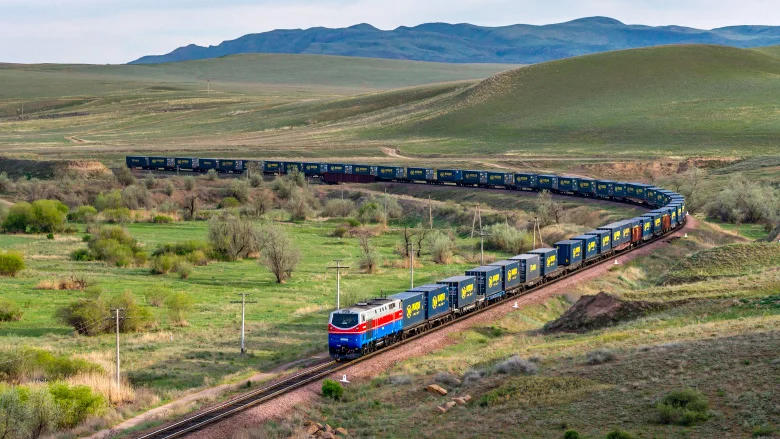





Comments